Buying property
Why France's Architectural Beauty Comes With Constraints for House Owners
The very thing that makes French towns look like postcards is the same thing that can turn a straightforward home renovation into a multi-month administrative negotiation. Understanding this before you sign is not optional homework.
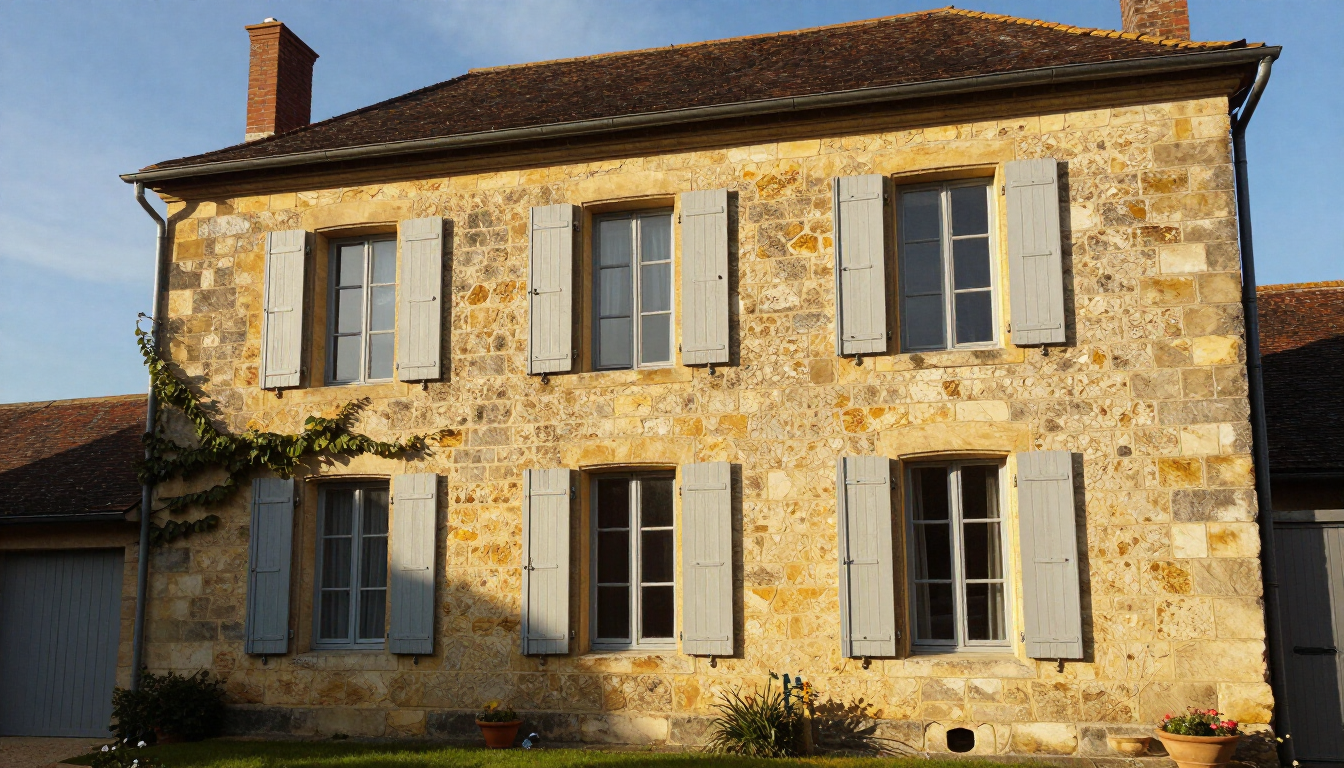
There's a particular moment that happens to almost every foreign buyer in France, usually around the second or third viewing. You're standing in front of a honey-stone façade, or a half-timbered house leaning ever so slightly with the confidence of four centuries behind it, and you think: this is it. This is why I moved here.
What almost nobody thinks in that moment is: and this is precisely why I may never be allowed to touch it.
The beautifully preserved villages, the untouched skylines, the total absence of glass-and-steel additions bolted onto seventeenth-century farmhouses — none of this is an accident, and none of it is free. It's the result of one of the most protective heritage frameworks in Europe, layered across decades of legislation. The very thing that makes French towns look like postcards is the same thing that can turn a straightforward home renovation into a multi-month administrative negotiation.
Understanding this before you sign a compromis de vente isn't optional homework — it's the difference between buying the house you can actually live in the way you want, and buying a beautiful problem.
The Three Layers You Need to Know
French heritage protection isn't a single rule — it's several systems that can overlap on the same property, sometimes without an obvious warning sign on the listing itself.
The ABF — The 500-Metre Rule
The ABF (Architecte des Bâtiments de France) is the one that catches most newcomers off guard. Any property within roughly 500 metres of a monument historique — a classified historic monument, which could be a château, a church, or sometimes a modest but registered building you'd never have guessed mattered — falls within a protected perimeter. Inside that perimeter, the ABF has authority to review and approve (or reject) any exterior modification: window replacements, roof material, paint colors, extensions, even the type of shutters you're allowed to install. Their word, in practice, is close to final.
What this means practically: you could buy a house that looks entirely ordinary, in a street of ordinary houses, and find that a nearby listed church or manor house places your entire property within a heritage control zone. The ABF does not advertise this. The listing won't flag it. And most estate agents won't raise it unless you ask.
The AVAP / Site Patrimonial Remarquable
The AVAP / Site Patrimonial Remarquable operates at the scale of a neighbourhood or historic town center rather than a single monument's radius. Entire village cores, old town quarters, and historic street networks can be designated this way, with their own detailed regulations covering everything from roof pitch to render color to the width of garden walls.
If you're drawn to the atmospheric town centers that make Nouvelle-Aquitaine so distinctive — and many people are, for entirely understandable reasons — this is the designation you're most likely to encounter. The regulations are specific and detailed, and they can restrict not just structural changes but cosmetic ones too.
The PLU — Municipal Planning Rules
The PLU (Plan Local d'Urbanisme), the municipality's own local urban planning document, adds a third layer — general zoning rules about building height, land use, setback distances, and what can and cannot be built on a given plot, independent of heritage status entirely.
A property can be affected by one of these systems, two, or — in the historic centres many retirees are drawn to — all three simultaneously. And crucially, these constraints attach to the building and its location, not to the current owner. They transfer automatically to you the day you sign.
A Tale of Two Houses
Same couple. Same architectural style. Same budget. Two completely different outcomes — because of a boundary line that isn't visible on any real estate listing.
One of the clearest illustrations of this came from a couple we worked with who had a very specific project in mind: a single-story extension to create a ground-floor guest suite, ahead of aging parents visiting more frequently.
Their first choice was a beautiful stone house tucked into a historic town center — postcard material, exactly the atmosphere they'd been searching for. When we looked into the extension project, the answer was clear and unmovable: the house sat within an ABF perimeter, in a designated historic zone. Any visible extension would need approval from the Architectes des Bâtiments de France, and given the constraints on materials, rooflines, and visual impact in that specific street, the project as envisioned simply wasn't feasible. Not 'difficult.' Not 'expensive.' Structurally impossible to approve as designed.
They didn't give up on the region — they widened the search perimeter instead. A few kilometres away, they found another house: similar character, similar era, comparable price point, but positioned just outside the protected perimeter and governed only by standard PLU rules. The same extension project, essentially unchanged, went from being rejected outright to being approved within a few weeks of standard permit processing.
Same couple. Same architectural style. Same budget. Two completely different outcomes — because of a boundary line that isn't visible on any real estate listing, and that most agents won't flag unless directly asked.
What This Means Before You Buy, Not After
The lesson here isn't 'avoid historic centers.' For many retirees, that exact setting — walkable, atmospheric, close to the boulangerie and the market square — is the whole point of the move.
The lesson is that if you have renovation or extension plans at all, even modest ones, checking a property's heritage and zoning status needs to happen before you fall in love with it, not after the compromis is signed and the clock on your conditions suspensives starts running.
None of this makes the house any less beautiful. It simply means the beauty comes with a set of rules that exist to keep it that way for the next resident too — which, once you've lived here a while, starts to feel less like a bureaucratic inconvenience and more like the whole point.
How France Made Easy Can Help
Checking heritage and planning constraints — the ABF perimeter, the AVAP designation, and the relevant PLU rules — is part of every property review we conduct for our clients. We do this before you are emotionally invested, so that the information reaches you at the moment when it can still change your decision, not after.
If you're in the early stages of a property search in Nouvelle-Aquitaine and want guidance on heritage constraints, renovation planning, or what to look for before making an offer, our Property Buying Assistance and Document Check services are both designed to answer exactly these questions. We also offer a one-hour Document Check review if you already have a property and specific renovation plans you'd like us to assess against the local planning framework.
You might also find helpful
Need help navigating France?
We guide buyers and newcomers through every step — from property search to administrative set-up.
Book a free consultation · See all services