Buying property
French Home Diagnostics Explained: What's Actually in That 200-Page PDF (And What You Can Skip)
The Dossier de Diagnostic Technique looks intimidating — but most of it is boilerplate, legally mandated padding, or information you can pull up yourself, for free, in under two minutes.
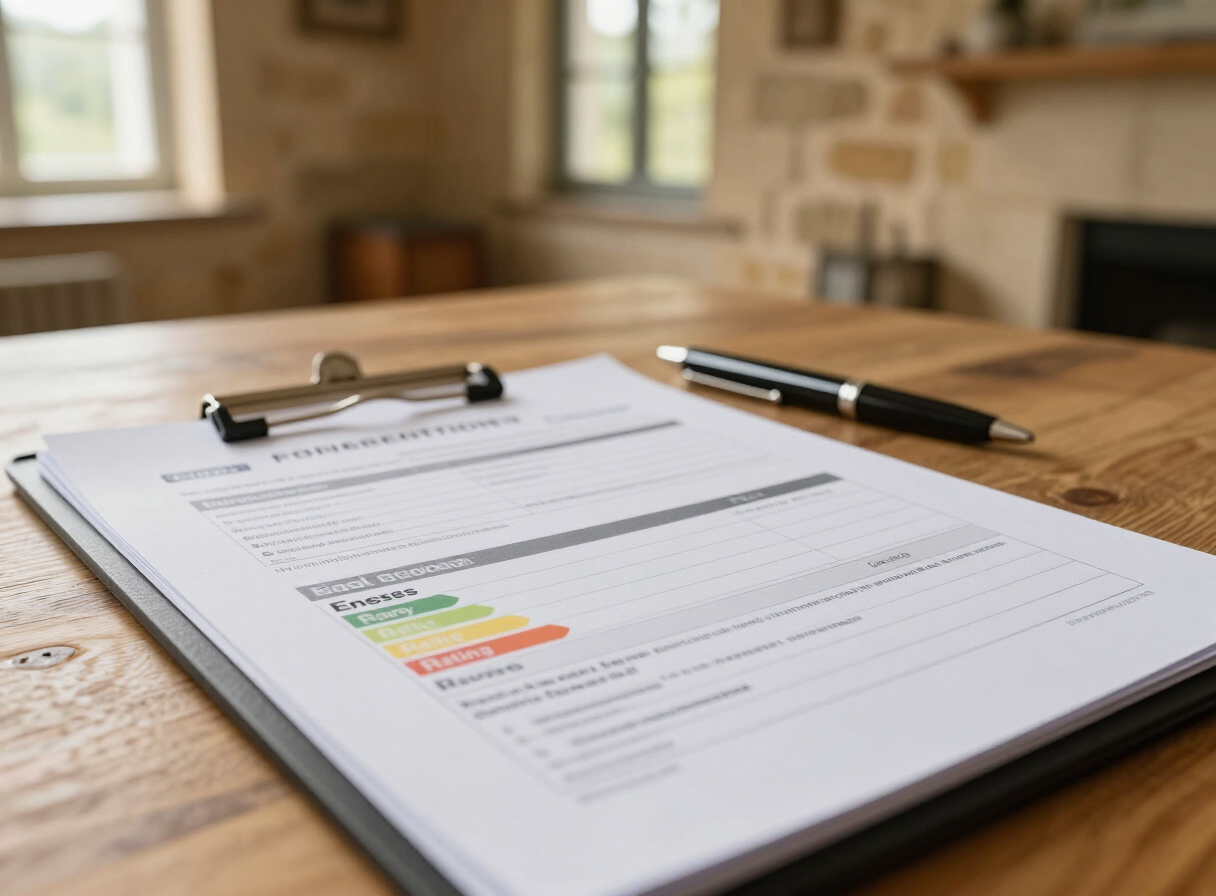
There's a particular moment that happens to almost every buyer partway through a French real estate purchase. Your agent emails you a PDF attachment. You open it expecting a few pages. Instead, your laptop fan spins up like it's doing a workout, and you're staring at a document that runs 150, sometimes 200-plus pages, covering everything from lead paint to termites to how close you live to a former gunpowder factory.
What almost nobody tells you in that moment is: most of that document is either boilerplate, legally mandated padding, or information you could have pulled up yourself, for free, in about ninety seconds. A much smaller slice actually deserves your full attention. Knowing which is which changes the whole experience from "overwhelming legal homework" to "quick, targeted read."
This is the Dossier de Diagnostic Technique, or DDT — and once you know its architecture, it stops being intimidating and starts being genuinely useful.
What the DDT Actually Is, and Why It's So Long
The DDT isn't one diagnostic. It's a binder of up to several separate reports, bundled together because French law requires the seller to hand them all over before you sign anything — the compromis de vente at the latest. The legal basis sits in the Code de la construction et de l'habitation (articles L271-4 to L271-6), and the obligation dates back to an ordinance from 2005 that consolidated what used to be scattered, separate requirements into a single mandatory package.
Depending on the property, the dossier can include up to a dozen distinct documents:
• DPE (Diagnostic de Performance Énergétique) — the energy label, A to G, plus greenhouse gas emissions.
• État de l'installation intérieure d'électricité — electrical safety, required if the system is over 15 years old.
• État de l'installation intérieure de gaz — same logic, for gas installations.
• CREP (Constat de Risque d'Exposition au Plomb) — lead paint, mandatory for anything built before 1949.
• État mentionnant la présence ou l'absence d'amiante — asbestos, mandatory for buildings with a construction permit issued before July 1997.
• État relatif à la présence de termites — only required in zones officially declared termite-infested by prefectural decree.
• État des risques (also called ERRIAL) — natural, mining, and technological risks, plus soil pollution and coastal erosion exposure where relevant.
• État de l'installation d'assainissement non collectif — septic system compliance, for homes not connected to mains sewage.
• Diagnostic bruit — aircraft noise exposure, only for properties near certain airports.
• Audit énergétique — an additional, more detailed energy audit, now mandatory alongside the DPE when a home is rated F or G.
Not every property gets every document — a termite report only shows up if your commune is in a designated zone, and the noise diagnostic only applies near specific airports. That's part of why page counts swing so wildly between one dossier and the next: a 1970s apartment in a city center might run 40 pages, while a stone farmhouse with its own septic system in a termite zone near a flood plain can easily blow past 200.
There's also a structural difference worth flagging: in the US, most of the technical burden shifts to a buyer-commissioned home inspection, a single generalist visual walkthrough by a licensed inspector, paid for by the buyer, not a set of specialist, seller-funded, legally standardized reports. The French system inverts that logic entirely — the seller pays certified professionals for narrowly scoped, standardized diagnostics before the buyer ever visits with an inspector of their own, and buyers rarely commission an additional independent inspection on top of it.
The Part Nobody Tells You: A Lot of This Is Already Free, Online, Right Now
The seller's diagnostic report and your own free lookup draw from the identical dataset — so you can check a property's risk profile yourself, in under two minutes, before the paperwork ever arrives.
Here's the demystifying bit, and it's the one that will save you the most time reading these dossiers going forward.
The état des risques section of the DDT — covering natural hazards, mining risk, technological risk, soil pollution, seismic zoning, radon exposure, and coastal erosion — is generated using data that comes almost entirely from one public source: Géorisques, at georisques.gouv.fr. Géorisques is a government platform run by the Ministry of Ecological Transition together with the BRGM (the French geological survey), online since 2014. It centralizes more than 30 official databases covering natural, mining, and technological risks across the entire country, and it's built specifically so that anyone — buyer, tenant, or simply curious neighbor — can type in an address and immediately see what risks are documented for that exact location. It's free, it's public, and it doesn't require an account.
In fact, since 2021, there's a tool called ERRIAL (errial.georisques.gouv.fr) that lets sellers generate the état des risques document directly from Géorisques' own database, just by entering an address or parcel reference. Which means, in a very real sense, the seller's diagnostic report and your own free lookup are drawing from the identical dataset.
So before you even receive the DDT, or while you're waiting on the seller to produce it, you can go to georisques.gouv.fr yourself, type in the property's address, and immediately see:
• Whether the area is covered by a flood risk prevention plan (PPRI).
• Seismic zoning classification.
• Radon potential level.
• Whether the property sits near a classified industrial site (installation classée) or in a soil pollution zone (SIS).
• Historical natural disaster declarations affecting the commune.
• Coastal erosion exposure, where relevant.
This won't replace the full DDT — the diagnostics still need to be professionally certified and legally attached to the sale for the transaction to be valid — but it means you can walk into your first viewing already knowing the risk profile of a property, rather than waiting weeks for paperwork to catch up with your curiosity. It's also an excellent gut-check tool: if the état des risques in your DDT says something that doesn't match what Géorisques shows you directly, that's worth a question to your notaire.
So What Should You Actually Focus On?
Given all that, here's a rough triage for where your attention is genuinely worth spending, versus where you can skim:
• Read closely: the DPE (it affects both your comfort and your resale value, and F/G-rated homes now face rental restrictions), the electrical and gas safety reports (real safety and real renovation cost implications), and anything flagged in the asbestos or lead reports if you're planning renovation work.
• Skim, but note the conclusion: termite and septic system reports — the summary verdict matters more than the methodology pages.
• Cross-check against Géorisques, don't just read passively: the état des risques section. You already have the tool to verify it yourself.
• File and move on: boilerplate legal notices, methodology appendices, and certification credentials of the diagnostiqueur, which make up a surprising share of the page count without changing your decision either way.
None of this makes the DDT any less mandatory, and none of it means you should skip having a notaire or diagnostiqueur walk you through anything genuinely unclear. It just means that two hundred pages doesn't have to mean two hundred pages of your attention. Most of that bulk is regulatory formatting, repeated legal text, and information that, for the risk section at least, you can pull up yourself in under two minutes on a government website that's been quietly doing this job, for free, for over a decade.
Legal Note
This article is provided for general informational purposes and does not replace professional advice from a licensed diagnostiqueur, notaire, or legal advisor for your specific transaction.
At France Made Easy we accompany foreign buyers every year through the administrative maze of buying and negotiating property in France.
Sources
- Géorisques — government risk information platform — Ministère de la Transition écologique / BRGM
- ERRIAL — état des risques generator — Géorisques
You might also find helpful
Need help navigating France?
We guide buyers and newcomers through every step — from property search to administrative set-up.
Book a free consultation · See all services